
Retellings and translations
The Prince's Tomb
ghost and song
- Paperback
- Kindle
Buy on Amazon: The Prince's Tomb (opens Amazon)
The Prince’s Tomb – A Ghost Epic is an assemblage of texts invoking Prince Shōtoku Taishi, warrior, priest and political visionary who was the Prince Regent of Japan from 593 to 621 C.E. In that shadowy age, he instituted Confucian governmental practices, made Buddhism a state religion, wrote the first Japanese constitution, composed the first book in Japanese (commentaries on Buddhist texts), and commissioned the first history of Japan. Beyond that, he was a seminal force in the establishment of Noh theater, court dance, sculpture, architecture, archery and many other aspects of Japanese culture. He is regarded, even now, as a quasi-deity, essential to the continuing life-force of culture as a whole. As in the earliest Japanese histories and later narratives, The Prince’s Tomb consists of fragmentary stories of deities and human beings, verses, reflections, folk riddles and their fugitive traces in modern consciousness. In this way, the book may convey a matrix of inwardness and yearning and evoke the core of a shared culture that binds us together beyond the limits of time, history and geographical space.
Also by Douglas J. Penick

De krijgsliederen van koning Gesar
The Dutch edition of The Warrior Song of King Gesar (Asoka, 2016).
Buy on Amazon: De krijgsliederen van koning Gesar (opens Amazon)
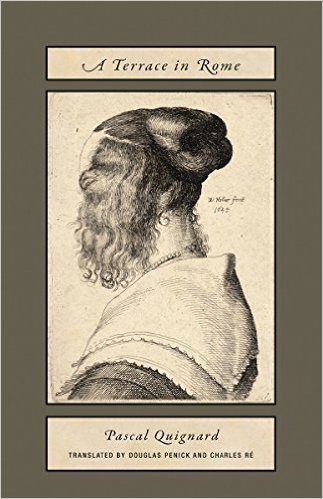
A Terrace in Rome
Translator
Pascal Quignard's novel of a seventeenth-century engraver, in its first English translation.
In Tricycle
His essays in Tricycle: The Buddhist Review, on old age, pain, memory and the sages; the list follows the magazine.

On the Seawall
An essay on Frank Rosenblatt, an essay on Froberger, and a poem, in Ron Slate's On the Seawall.
Read: Frank Rosenblatt in Passing: The Rebirth of the Mimetic Impulse